The Greek Economic Recovery: From Sovereign Default to a Bright Spot in Europe
January 10, 2024 · Greece · 13 min read
Once synonymous with crisis, public debt, and default, Greece has been dramatically transformed over more than 10 years. The Greek economic recovery has made it one of Europe’s fastest-growing economies and a promising destination for investors worldwide.
While major European economies such as Germany, France, and the UK face headwinds, Greece now ranks among Europe’s fastest-growing economies, and both inflation and unemployment have improved markedly. Strong foreign tourist arrivals, stepped-up investment by multinational companies, credit rating upgrades, and the return of bank lending have benefited the economy as a whole and restored major investors’ confidence in the Greek market.

The Greek debt crisis: a shock felt around the world
The Greek sovereign debt crisis of the 2010s was one of the most memorable crises of the 21st century, both for European financial markets and for the global economy. Brewing since the late 2000s and deepening sharply from 2009, Greece’s ordeal stemmed from 5 main causes: slowing economic growth and low domestic savings, severe and persistent budget deficits, lax fiscal discipline, a rapid build-up of public debt, and declining confidence in the reliability of official economic statistics.
The debt crisis cast a long shadow over the entire Greek economy. Credit rating downgrades, rising government bond yields, harsh austerity borne by both the government and the public, a sharp fall in GDP growth, rising unemployment, and shrinking foreign direct investment (FDI) were the most visible effects of the crisis on what had previously been one of the better-performing economies in Europe.
A remarkable turnaround
In August 2018, Greece’s debt crisis came to an end. The country’s recovery was driven mainly by the efforts of the Greek government and people through 8 years of spending cuts, and by the government’s effective cooperation with its European partners to secure support through loans, debt relief, and 3 bailout programs from the EU, the European Central Bank (ECB), and the International Monetary Fund (IMF).
After Greece formally exited its final bailout program, which began in 2015 and ran for 3 years, the credit rating agency S&P Global Ratings raised its outlook on Greek sovereign debt from “stable” to “positive.” The agency also noted that reforms to tax policy and the business environment would continue to support growth in the country. Unemployment had fallen significantly, from more than 27% to below 15% at that time. In addition, an agreement extending repayments of public debt to European creditors by a further 10 years ended Greece’s reliance on foreign bailout programs; in other words, the country could once again stand on its own feet.
Revival and a positive economic outlook
With a decade-long debt crisis behind it, the Greek economy is steadily recovering, and the country is emerging as a bright spot in the European economy. In its recently published World Economic Outlook (WEO) report, the International Monetary Fund (IMF) projects that the Greek economy will grow 2% in 2024, outpacing average growth of 0.7% to 1.2% in the euro area. The IMF also issued several other upbeat forecasts: Greek inflation is expected to fall to 2.8% in 2024, compared with 3.3% in the euro area. Unemployment is projected to fall to 9.3% in 2024 (from 10.8% in 2023 and 12.4% in 2021), and the budget deficit is expected to narrow to 6% of GDP (from 6.9% of GDP in 2023).
The Economist named Greece the best-performing economy of 2023 in its annual ranking of mostly rich countries, followed by South Korea and the United States. One of the biggest drivers of the Greek economy has been its credit rating upgrades, which have strengthened domestic and foreign investor confidence in the macroeconomic outlook and the business environment. Major corporations have been expanding into Greece: Microsoft is building 3 data centers in Athens, expected to generate €1 billion in economic benefits, and Pfizer is building a €650 million innovation research hub and operations center in Thessaloniki. American, Chinese, and European companies are pursuing renewable energy deals, and investments by JPMorgan, Meta, Cisco, and other multinationals are expected to generate billions of euros in economic impact for Greece over the next few years.
Tourism, another key driver, has rebounded strongly, giving further lift to the economy of the “land of the gods.” In the first 10 months of 2023, Greece recorded 23 million air arrivals and 9.5 million international arrivals by road, up 11.5% and 33.1% respectively year over year. Tourism is estimated to have contributed 11.5% of Greece’s GDP in 2023, equivalent to €24 billion (according to the Institute of the Greek Tourism Confederation, INSETE), stimulating construction activity and creating new jobs. Tourism remains a leading sector of the Greek economy and is expected to keep driving its growth.

Crete, an island paradise
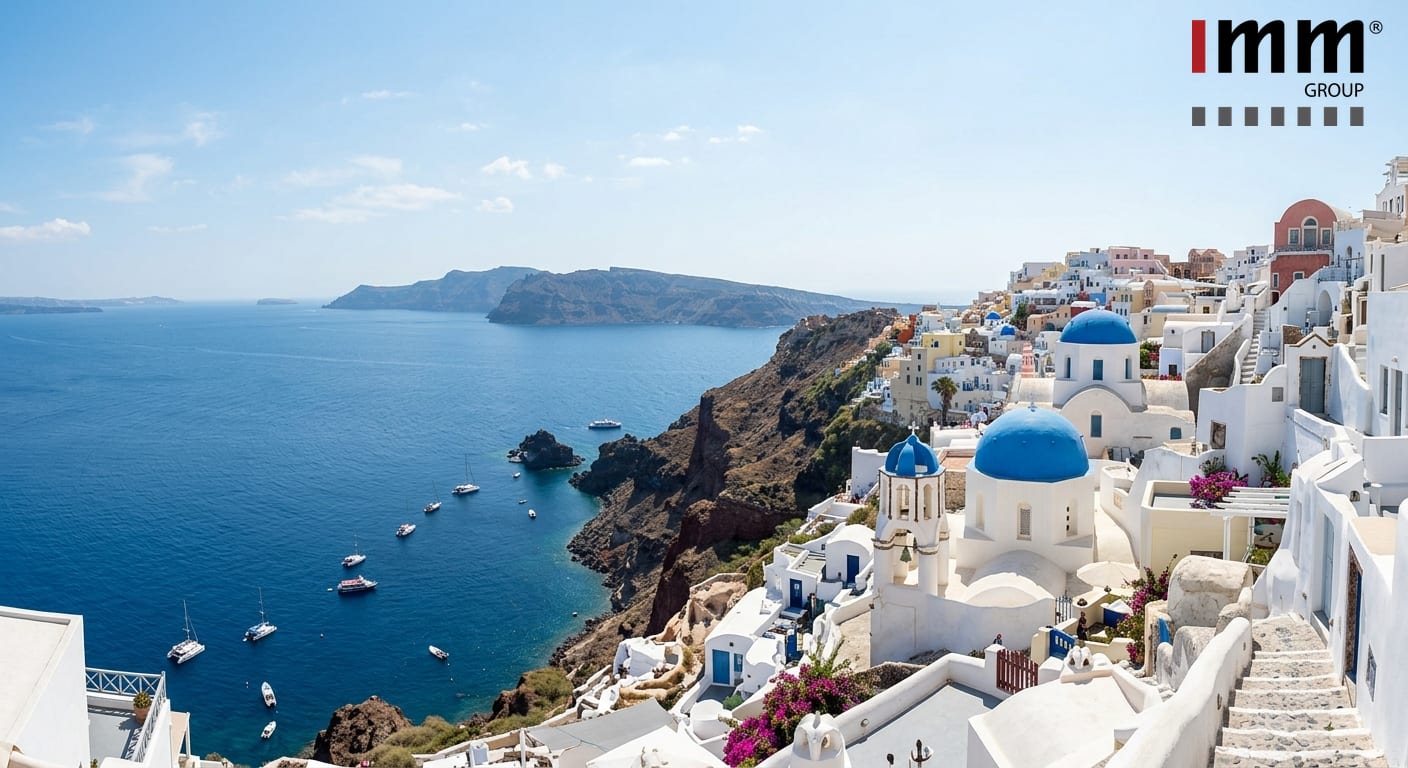
Santorini, one of Greece’s best-known summer destinations
According to the Bank of Greece, net FDI inflows into Greece exceeded €7.9 billion in 2022, the highest level since 2002. This record further confirms the upward trajectory of the Greek economy and the country’s success in attracting foreign investment in recent years. Several surveys suggest that investment in Greece will keep rising in the coming years, as more companies plan to establish or expand operations in the country.
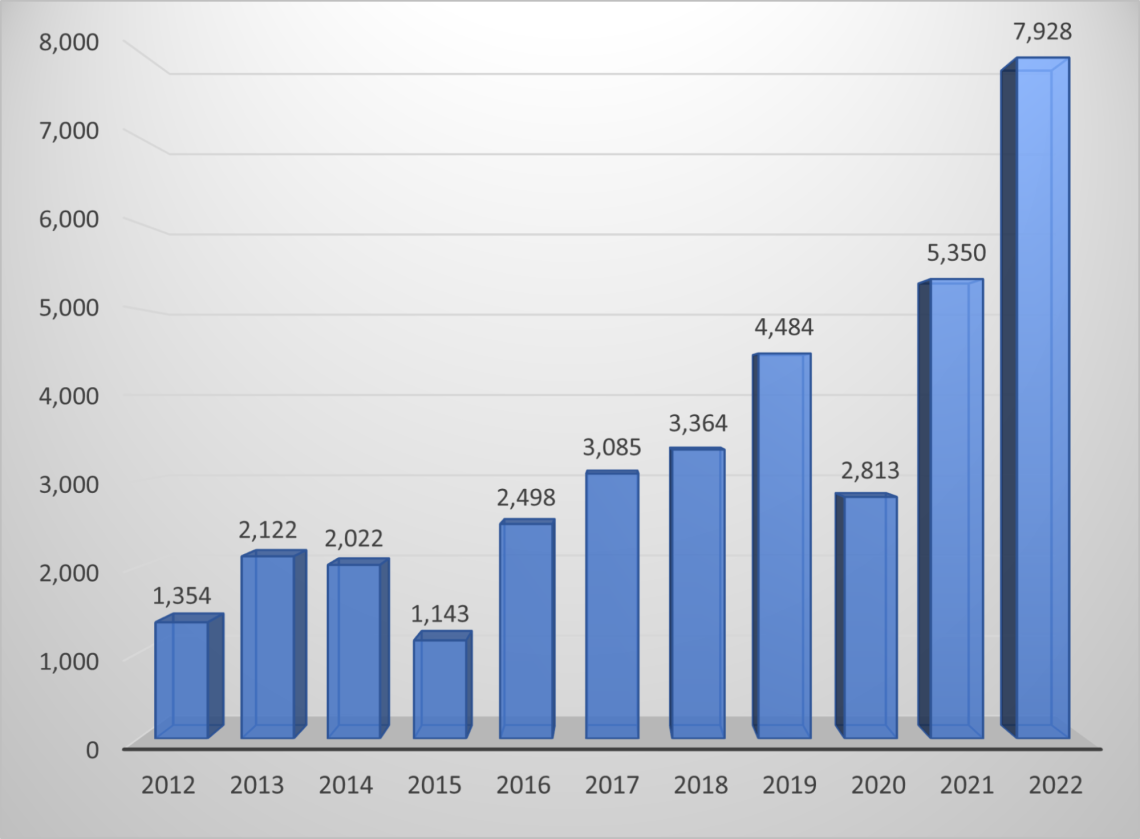
Net FDI inflows into Greece, 2012–2022 (source: Bank of Greece)
A buoyant real estate market and record FDI
Notably, foreign direct investment in Greek real estate reached €1.97 billion in 2022, the highest on record. The Greece Golden Visa program has drawn further global investor interest to Greece’s dynamic property market: at the time of writing, investors and their families could obtain a Greek residence permit by purchasing real estate from €250,000 (approximately US$280,000), with visa-free travel within the Schengen Area (Germany, France, Italy, the Netherlands, and others) for up to 90 days in any 180-day period.
Home prices in Greece have continued to rise sharply, driven by growing demand from foreign investors and sustained domestic economic growth. The first half of 2023 was the Greek housing market’s strongest period in 2 decades, with prices up more than 11% year over year.
If you are interested in Greek real estate investment for residency, contact IMM Group or leave your details below. Our experienced advisors will provide detailed guidance and help assess your application’s prospects. We are committed to keeping your personal data confidential and use the information you provide solely to advise on your family’s case.
IMM Group
Was this article helpful?