New Zealand Property Market Forecast and Trends
October 29, 2025 · New Zealand · 15 min read
While many international property markets are contending with macroeconomic volatility, New Zealand continues to draw investors on the strength of its political stability, transparent legal system, and policies that welcome foreign investors. What makes this small country a destination for individuals and institutions looking for a sustainable way to allocate their wealth, and what does the New Zealand property market forecast suggest for the years ahead?
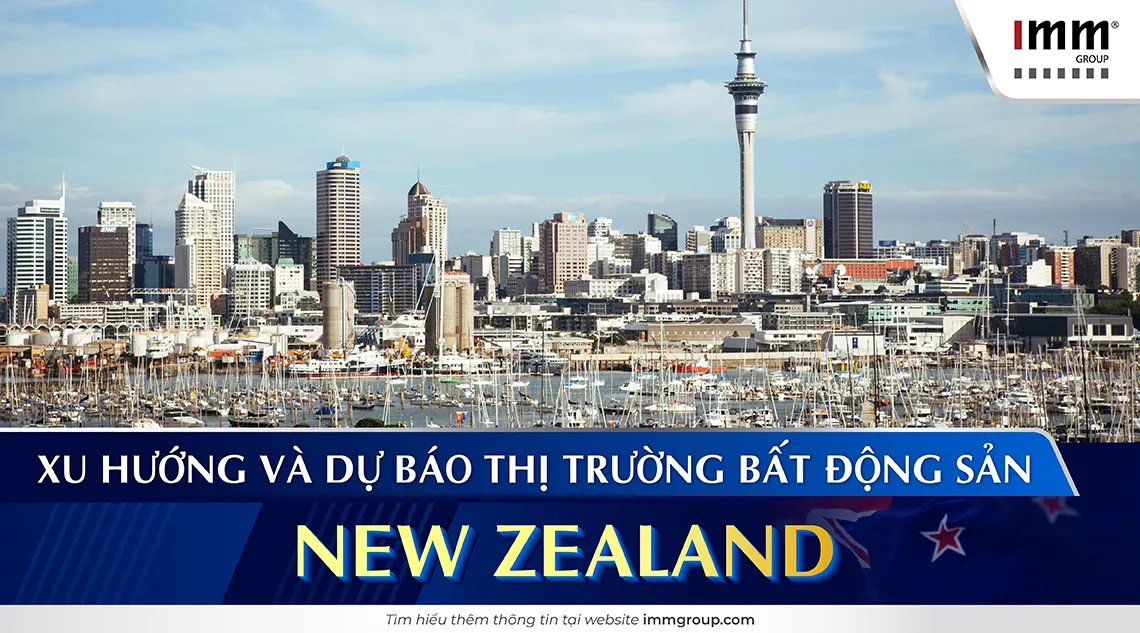
First, New Zealand imposes no foreign exchange controls, so international investors can freely move profits, capital, and dividends out of the country. A clear property ownership system and independent legal institutions also help reduce risk throughout the investment lifecycle.
That said, the market is not entirely “open.” For property classified as “sensitive land” (which accounts for a large share of the market), foreign investors must meet strict conditions set by the Overseas Investment Office (OIO). Careful preparation and a firm grasp of the legal framework are decisive for success when investing in New Zealand property.
Key segments of the New Zealand property market
Property in New Zealand falls into three main categories: residential, unit title apartments, and commercial real estate. Each segment differs not only in its form of ownership but also in the legal rules that govern it and its investment potential:
- Residential freehold is the most common property type, particularly in urban centers such as Auckland, Wellington, and Christchurch. However, foreign investors cannot freely buy residential property unless they meet specific conditions. Overseas buyers who are not resident in New Zealand generally have to take a development route, building new homes for sale (the “increased housing pathway”), or commit to using the property as a long-term residence.
- Unit title apartments are common in high-density residential areas. They have a lower entry cost and suit a rental investment strategy. However, investors need to understand their responsibilities within the body corporate, including financial obligations, body corporate rules, and exposure to decisions made collectively by the unit owners.
- Commercial real estate, such as offices, retail space, and logistics warehouses, is a more open segment for international investors. In most cases, these assets do not require OIO consent (unless the land is classified as “sensitive”). They are also often leased long term to large businesses, which supports stable cash flow.
Example:
An overseas investor wants to buy land in the Auckland region to develop a small residential project of 12 homes. Because this is residential land, the investor must apply for OIO consent and demonstrate the benefits to New Zealand through the “Benefit to NZ Test.” If the plan to add new housing is approved, consent is granted under the “increased housing pathway,” allowing the investor to develop the homes, sell them, and earn a lawful profit.
Legal requirements for foreign investors
New Zealand’s Overseas Investment Act 2005 defines an “overseas person” very broadly: an individual who is neither a New Zealand citizen nor ordinarily resident in New Zealand, or an entity that is more than 25% owned or controlled by overseas persons.
When a transaction involves special categories of assets such as sensitive land, significant business assets, or fishing quota, investors must apply for OIO consent. The process involves three layers of screening:
1. Investor Test: assesses the investor’s trustworthiness, financial history, and legal capacity.
2. Benefit to NZ Test: requires the investor to show that the transaction delivers genuine added value, such as job creation, infrastructure development, or environmental improvements.
3. National Interest Test: applies where the investor has links to a foreign government, or where the asset falls within a strategic sector (such as telecommunications or ports).
A key point to note is the “suspensory” approval regime: investors cannot complete the transaction until consent has been granted. Assessment typically takes between 35 and 100 working days, depending on complexity.
How to buy property in New Zealand
Although New Zealand offers a favorable business environment, buying property, particularly as a foreign investor, still involves a rigorous process with the following key steps:
1. Identify the asset type: check whether the land is classified as “sensitive.”
2. Set up a New Zealand entity (if needed): options include a company or a limited partnership.
3. Obtain an IRD number (New Zealand tax number): a mandatory requirement for completing the transaction.
4. Sign a conditional sale and purchase agreement: usually including a “subject to OIO consent” clause and a “due diligence” condition.
5. Prepare and lodge the OIO application: including investor information, development plans, and a benefit analysis.
6. Complete the transfer: once consent is granted, finalize registration through the electronic system of Land Information New Zealand (LINZ).
7. File tax returns and settle all financial obligations.
Engaging a local lawyer is all but essential to ensure legal compliance and to formally represent the investor.
Property taxes and transaction costs
Depending on the type of transaction and the buyer’s status, the following tax obligations may arise:
- Bright-line test: if a property is sold within 2 years of purchase, the gain is taxed as ordinary income.
- Residential land withholding tax (RLWT): may be withheld at source if the seller is a foreign investor.
- Tax on rental income: charged at personal or corporate income tax rates.
- LINZ registration fees, legal fees, and real estate agent fees.
- OIO fees: ranging from NZ$38,800 to NZ$141,900, depending on the application type and any additional assessment required.
A sound tax strategy not only helps optimize returns but also reduces legal risk over the long term.
Emerging trends and long-term growth outlook
Driven by recent policy changes and long-term trends, the New Zealand property market is being reshaped along more sustainable, selective, and infrastructure-led lines:
- The Net Zero 2050 commitment is driving demand for energy-efficient homes and smart urban development.
- Strong urban population growth, particularly in the wider Auckland region, is fueling steadily rising demand for new housing.
- Industrial and logistics property is gaining ground on the back of e-commerce growth, driving demand for warehouses and distribution centers.
- The increased housing pathway remains the only “legal route” for foreign investors in the residential segment.
Forecasts from established institutions such as the Real Estate Institute of New Zealand (REINZ) and the New Zealand Treasury suggest that property prices will continue to rise by 3–5% per year over 2025–2030, particularly in areas benefiting from strong public investment and infrastructure upgrades.
IMM Group: why choose a proven advisory firm?
The global investment migration landscape is constantly shifting and increasingly complex. Investors need an advisory partner who not only helps them build a strong application but also offers reassurance about their family’s future. For New Zealand investment migration programs, as for all of our global investment migration solutions, IMM Group stands out as a strategic advisory partner, supporting you with experience and integrity.
As a pioneer with more than 21 years of hands-on experience in Vietnam, IMM Group does not act as a sales agent. We do more than advise — we design investment migration solutions built on:
- Rigorous due diligence and risk management: Having successfully handled hundreds of applications, including complex cases, we conduct multi-layered project due diligence and protect investors’ interests rigorously, including during periods of market stress.
- In-depth professional advice and full transparency: Every IMM Group consultant and case manager holds an international investment migration advisory certification issued by the Investment Migration Council (IMC). Our team provides a comprehensive analysis of benefits and risks so you can make decisions based on complete and accurate information. We put our clients’ long-term interests first.
- Integrity and commitment at every stage: Guided by our philosophy, “Serving with Authentic Values,” IMM Group commits to supporting you from the first step until you are settled. Integrity is our foundation, reflected in our readiness to protect client interests and to proactively refund service fees when risks beyond the client’s control arise (as set out in the contract).
- Giving back: Since 2025, IMM Group has operated as a nonprofit enterprise, committing at least 50% of its annual profits to the Be Better Fund. By choosing IMM Group, you join us in supporting meaningful initiatives and the social responsibility and human values we pursue.
If you are interested in New Zealand investment migration programs, contact IMM Group or leave your details below. Our experienced advisors will provide detailed guidance and help assess the prospects of your case. We will keep your personal data confidential and use the information you provide only to advise on your family’s case.
IMM Group
- Tags:
- New Zealand residency by investment
- New Zealand real estate investment
- international real estate
- New Zealand property purchase process
Was this article helpful?