EB-5 Project Due Diligence: How Reputable Regional Centers Assess Project Risk, Green Card Safety and Return of Capital
December 5, 2025 · EB-5 · 17 min read
The EB-5 program is going through an unusual period: rarely have so few projects on the market met the standard. Many long-established regional centers, once known for bringing new projects to market continuously, now offer only a narrow set of options — and at times none at all. Understandably, this leads investors to ask whether the large regional centers are in trouble, or whether something else is going on.
The answer runs the other way. Precisely because U.S. capital markets are highly volatile and the EB-5 Reform and Integrity Act of 2022 (RIA) has tightened legal requirements, reputable regional centers are having to be more cautious than ever. Tom Rosenfeld, President and CEO of the regional center CanAm Enterprises, describes the market as being in a phase where it is “better to have no project at all than to launch one that is not safe enough.” In his view this is not a loss of capability, but the caution needed to maintain quality and preserve investor capital.

The 2025 market backdrop: tightening liquidity and a maturity wall in U.S. capital markets
The U.S. commercial real estate market is working through its most difficult cycle since 2008. Across 2024 and 2025, U.S. commercial real estate has faced roughly US$1 trillion of maturing debt, while interest rates have stayed high and banks have all but stopped writing new credit. Tom Rosenfeld describes this as a “real liquidity crisis”: sellers still hold on to the price expectations of the previous cycle, while buyers are more cautious than ever. That gap has frozen transactions, left private funds holding assets rather than selling, and pushed the whole market into a capital logjam.
In that environment, many projects that once penciled out no longer work at all. According to CanAm, as many as 30% of transactions are being renegotiated midstream because of moves in interest rates and the cost of capital. The result is a paradox: more projects are turning to EB-5 to raise capital, but most of them are the troubled ones — projects that fall short of bank underwriting standards, lack developer equity, or survive only if EB-5 money arrives. Projects like these never reach the shortlist of a reputable regional center such as CanAm or EB5 Capital.
The RIA of 2022: tighter rules have made project due diligence far heavier and more complex
Alongside difficult markets, regional centers must comply with the new legal framework created by the EB-5 Reform and Integrity Act of 2022 (RIA), which was designed to improve transparency and protect investors. It has also driven up both the time needed to prepare a project and the cost of due diligence.
An EB-5 project today has to clear several layers of review: verification of the developer’s own equity, the legal structure, control over cash flows, capacity to create jobs, and the involvement of independent oversight parties such as a fund administrator. Regional centers also carry greater legal liability if something in a project goes wrong.
With so much risk in the macroeconomic picture, these requirements have forced leading regional centers to tighten their standards. In many cases they spend months verifying each economic assumption or construction budget line, or running sensitivity analyses to see how a project would hold up if revenue fell, interest rates rose, or construction ran behind schedule.
As a result, even a project that looks workable at first glance may be dropped after only a few rounds of deeper analysis. Held to that standard, many large regional centers have been able to bring forward just a handful of projects over the past year.
Rural projects: rising demand, and even stricter standards
The RIA gave rural EB-5 projects a significant advantage in petition processing speed and visa set-asides, and demand from EB-5 investors has risen sharply as a result. But that same advantage has led many intermediaries to promote rural projects without weighing their commercial risk. Large regional centers are candid that rural areas face real constraints: thinner commercial demand, less infrastructure, less resilience in a downturn, and development capability that is uneven compared with major urban markets.
So to clear the due diligence standards of a reputable regional center, a rural project has to satisfy the immigration requirements and be genuinely commercially viable — which is far from easy. If a rural project stands up only because EB-5 capital is available and could not survive in the real economy, that is treated as a red flag. Regional centers therefore often commission independent advisors to carry out in-depth market research before they will even consider it.
That rigor also makes an important point clear: whether a project is rural or in a standard Targeted Employment Area (TEA), the criteria for evaluating an EB-5 project are the same. What determines the project pipeline a reputable regional center puts forward is, above all, the soundness of the capital structure, commercial viability, transparency and the capacity to return capital — not the “priority processing” label.
This is why investors will see both types of project appear at different points in the market. When a rural project fully meets the due diligence standards, it is brought forward. When standard TEA projects meet the criteria — particularly those with real demand, real cash flow and a stable commercial base — they enter the pipeline too. Which projects are put forward is therefore not weighted toward rural or standard TEA; it rests entirely on the core question of which project is genuinely sound and deserving of an EB-5 investor’s trust.
How large regional centers approach due diligence: discipline, rigor, and capital preservation first
With many projects no longer economically viable, reputable regional centers such as CanAm and EB5 Capital apply an extremely strict due diligence philosophy. These regional centers work only with projects that have genuine matching capital from the developer, typically 25% to 30%. This is not just a financial requirement but a measure of commitment: the developer must take on risk ahead of EB-5.
They also require a project to be independently viable. If a project cannot exist without EB-5 capital, they eliminate it immediately. They do not trust overly optimistic projections and run sensitivity analyses to test each project’s durability under adverse scenarios. Finally, the capital structure must ensure repayment priority for EB-5 investors in every scenario.
The question a reputable regional center asks of every project is simple but decisive: “Will this project have enough liquidity in the next 5, 6, or 7 years to repay investors’ capital?”
If the answer is not certain, the project is rejected at once, no matter how attractive it looks on paper.
A single failed project or legal entanglement can seriously damage a reputation built over decades. That is why, in volatile capital markets, a regional center will accept going months without a new project rather than launch one whose risks it cannot fully control.
Project scarcity is evidence of discipline
From the analysis above, one point stands out: investors having to wait for a well-vetted EB-5 project today is not a bad signal, but the inevitable result of a market held to tighter standards.
Project scarcity does not reflect a decline in regional center capability; it reflects their discipline: releasing a project only when certain it fully meets financial and legal standards and can preserve investor capital. At a time when developers are competing for alternative capital, a regional center holding firm to investor-protection standards is precisely what sets reputable firms apart.
IMM Group: a pioneering, long-established partner for EB-5 investors
The global investment migration landscape is constantly shifting and increasingly complex. Investors need an advisory partner who not only helps them prepare a sound application but also gives their family peace of mind about the future. For the EB-5 Immigrant Investor Program, as for all of our global investment migration solutions, IMM Group acts as a strategic advisory partner, supporting you with experience and integrity.
As a pioneering, long-established firm with more than 21 years of hands-on experience in Vietnam, IMM Group is not a sales agent, and we do more than advise: we design global investment migration solutions built on:
- Rigorous due diligence and risk management: Our experience successfully handling hundreds of cases, including complex ones, enables us to conduct multi-layered project due diligence and protect investors’ interests rigorously, even during market crises.
- In-depth professional consulting and full transparency: Every IMM Group advisor and case manager is certified in investment migration advisory by the Investment Migration Council (IMC). Our team analyzes benefits and risks in full, so you can make decisions based on complete and accurate information. We put our clients’ long-term interests first.
- Integrity and commitment every step of the way: Guided by our philosophy, “Serving with Authentic Values,” IMM Group stays with you from the first step until you have settled in your new country. Integrity is our foundation, reflected in our readiness to stand up for clients’ interests and to proactively refund service fees when risks beyond the client’s control arise, as set out in the contract.
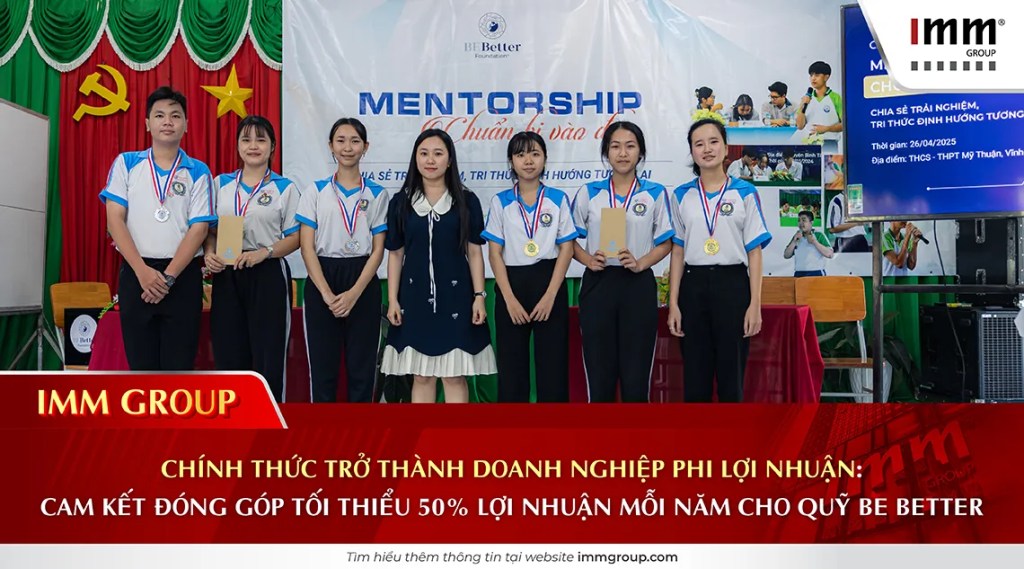
- Receiving and giving back: Since 2025, IMM Group has operated as a nonprofit enterprise, committing at least 50% of its annual profits to the Be Better Fund. By choosing IMM Group, you also help hundreds of students facing exceptional hardship gain a chance to change their lives.
If you are considering a U.S. green card through the EB-5 Immigrant Investor Program, contact IMM Group or leave your details below. Our experienced advisors will provide detailed guidance and help assess your petition’s likelihood of success. We will keep your personal data confidential and use the information you provide only to advise on your family’s case.
IMM Group
- Tags:
- U.S. investor immigration through EB-5
- Rural EB-5 projects
- TEA
- U.S. green card
- CanAm regional center
- EB5 Capital regional center
Was this article helpful?
30