Bulgaria and Romania Join Schengen, Widening Visa-Free Travel for European Residence Permit Holders
January 10, 2025 · Europe · 8 min read
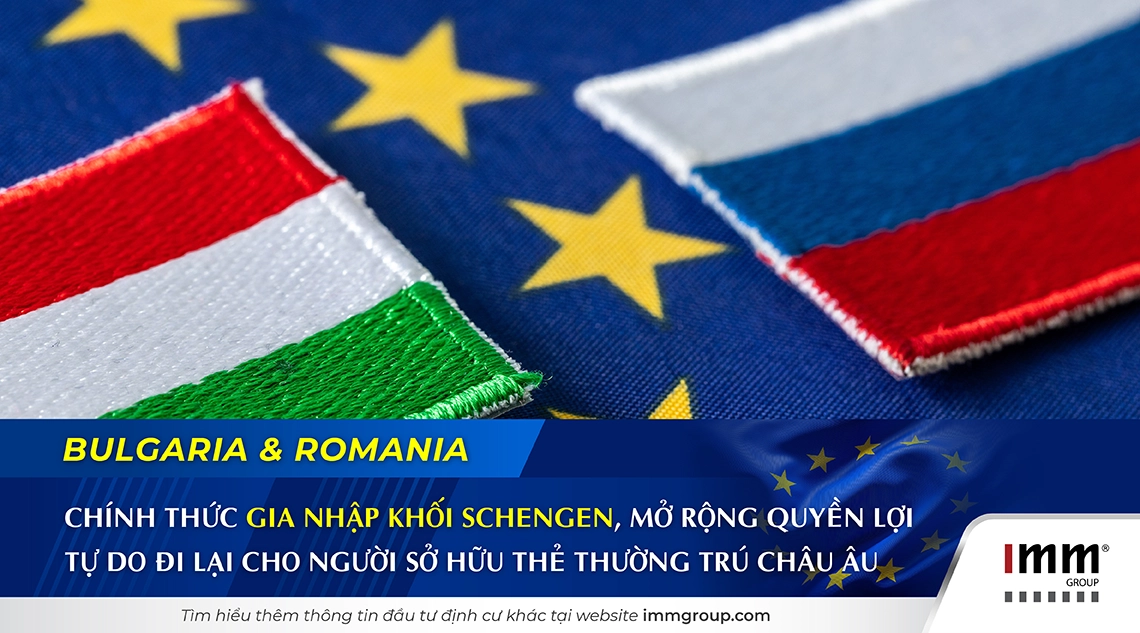
On January 1, 2025, Bulgaria and Romania became full members of the Schengen Area, expanding the area without internal border controls to 29 countries. The milestone matters not only for Bulgaria and Romania but also for holders of residence permits issued by Schengen member states, who can now travel visa-free across a wider area without border checks.
A milestone in Bulgaria and Romania’s European integration
Bulgaria and Romania joined the European Union (EU) in 2007, but their entry into the Schengen Area, Europe’s free-travel zone, was delayed for more than a decade over concerns about migration control and corruption. Full Schengen membership marks a significant step toward closer EU integration for both countries, strengthening cooperation and opening new opportunities in trade, tourism, and investment.
Bulgaria and Romania had partially joined the Schengen Area in March 2024, when checks on persons at internal air and sea borders were lifted. On January 1, 2025, checks at internal land borders were also lifted, completing their accession: travelers crossing between Bulgaria or Romania and other Schengen states no longer go through routine document checks, making travel across the region easier. European leaders welcomed the decision, particularly as the bloc seeks to deepen integration and cohesion among its member states.
Beyond border-free travel, Schengen membership is expected to benefit the Bulgarian and Romanian economies. By one estimate, Romania could gain up to €800 million a year from joining the Schengen Area through higher tourism, trade, and international investment, while at the same time both countries strengthen their standing with global economic partners.
The expansion is expected not only to benefit Bulgaria and Romania but also to strengthen cohesion and cooperation across the Schengen Area and to support economic growth throughout the EU.
Wider travel rights for European residence permit holders
A European residence permit is a long-term permit issued by an EU member state to a non-EU national, granting the holder legal residence and certain rights comparable to those of the country’s citizens. Depending on the permit, these can include the right to live, study, and work in the issuing country and, for permits issued by Schengen states, to travel within the Schengen Area.
With Bulgaria and Romania now in the Schengen Area, holders of residence permits issued by Schengen member states such as Portugal, Spain, Greece, Malta, and others gain wider visa-free travel within the bloc. A residence permit from one Schengen state now gives access to short stays across 29 countries instead of 27, for up to 90 days in any 180-day period.
As a result, residence permits from Schengen member states become even more valuable, giving an added advantage to those looking to invest or live in Europe. Already an attractive destination for international investors, Europe has become even more appealing.
Residency by investment in Europe: visa-free travel within the Schengen Area
Investors from non-Schengen countries can gain these travel rights through residency by investment programs in Schengen member states such as Portugal, Greece, Spain, and Malta.
Beyond visa-free travel within the Schengen Area, investors and their families may also benefit from life in the country that issues their residence permit, such as access to tuition-free public education and high-quality, European-standard healthcare, depending on the program and local rules. Residency offers not only easier travel but also the opportunity to live—and, where the program allows, work—in a developed country with a high standard of living.
| Explore European residency by investment programs
If you are interested in European residency by investment programs, contact IMM Group or leave your details below. Our experienced advisors will provide detailed guidance and help assess your application’s likelihood of success. We are committed to keeping your personal data confidential and use the information you provide only to advise on your family’s case.
IMM Group
Was this article helpful?