Hong Kong vs Singapore Residency by Investment: Which Is the Strategic Choice for Investors?
January 2, 2026 · Hong Kong · 14 min read
As global capital keeps shifting, Hong Kong and Singapore compete fiercely not only for their standing as Asia’s financial centers but also for ultra-high-net-worth individuals (UHNWIs), through dedicated residency programs. For investors weighing Hong Kong vs Singapore residency by investment, choosing between the “Fragrant Harbour” and the “Lion City” is not just a question of returns — it is a matter of wealth planning and family positioning for a new era.

Hong Kong vs Singapore Residency by Investment: Which Is the Strategic Choice for Investors?
How the programs compare: New CIES (Hong Kong) and the GIP (Singapore)
As of November 2025, both Hong Kong and Singapore have set high entry thresholds to screen investors, prioritizing the quality of capital and its real contribution to the economy over the number of applications.
- Hong Kong – New Capital Investment Entrant Scheme (New CIES): Relaunched and refreshed, this program focuses on attracting passive capital into Hong Kong’s financial markets. A key 2025 development is the Hong Kong SAR Government’s openness to new asset classes, including the possibility of accepting cryptocurrencies as proof of assets, reflecting the city’s ambition to become the region’s Web3 hub.
- Singapore – Global Investor Programme (GIP): Administered by the Singapore Economic Development Board (EDB), the GIP is seen as the “gold standard” but also as one of the most selective programs in the world. In 2025, the program kept its capital requirements very high while tightening criteria on local hiring and on the total revenue of the applicant’s main company in their home country.
Detailed comparison: investment requirements, benefits, and processing times
For a clear view, below is a side-by-side comparison of the core criteria under current rules:
1. Investment requirements and capital structure:
Hong Kong (New CIES): a minimum investment of HK$30 million (approximately US$3.85 million), comprising:
- HK$27 million in permissible financial assets and/or real estate (equities, debt securities, certificates of deposit, and non-residential real estate, with real estate capped at HK$10 million).
- HK$3 million must be placed in the CIES Investment Portfolio, which supports innovation and technology.
Singapore (GIP): a minimum investment of S$10 million (approximately US$7.8 million) to S$25 million (approximately US$19.5 million), depending on the option:
- Option A: S$10 million invested in a new or existing Singapore business, plus a business expenditure commitment.
- Option B: S$25 million in a designated GIP-select fund.
- Option C: establish a single family office (SFO) with assets under management (AUM) of at least S$200 million.
2. Residency and citizenship benefits:
- Hong Kong: residence visas are granted on a 2-year + 3-year + 3-year pathway. Only after 7 years of continuous ordinary residence can the investor apply for Hong Kong permanent resident status (PR); eligibility for a Hong Kong SAR passport depends on nationality.
- Singapore: the GIP is one of the few programs that grants permanent residence (PR) from the outset. After 2 years as a PR, the investor may apply for naturalization (subject to strict physical residence requirements).
3. Processing times and assessment process:
- Hong Kong: relatively fast (around 6–9 months), as it is essentially a passive asset investment and does not require running a complex business.
- Singapore: the due diligence process is highly rigorous and takes 9–12 months. The EDB assesses not only the source of funds but also the investor’s track record and the added value they bring to Singapore.
Strengths and weaknesses: a difficult trade-off for investors
Hong Kong: flexible but exposed to volatility
Strengths:
- A diversified investment portfolio, including commercial real estate and highly liquid financial instruments.
- No requirement for management or business operating experience in Hong Kong.
- Close links to the mainland China market through the Greater Bay Area (GBA).
Weaknesses:
- Permanent residence is not granted upfront; investors must hold residence status for 7 years.
- Property values and living costs are among the highest in the world.
Singapore: stable but with very high barriers
Strengths:
- A high degree of political and legal stability.
- Education and healthcare systems among the best in Asia.
- Immediate PR status, a recognized marker of standing among ultra-high-net-worth individuals.
Weaknesses:
- A capital threshold far above most residency programs worldwide (roughly 10 times the U.S. EB-5 minimum).
- Local hiring and business spending requirements create significant operating pressure.
ROI analysis and business expansion potential
In terms of return on investment (ROI), Hong Kong currently has the edge, thanks to an active stock market and asset valuations that have corrected to more reasonable levels after a period of volatility. The authorities’ decision to count cryptocurrency holdings toward an applicant’s net assets (per early 2025 updates) opens up diversification opportunities for technology investors.
By contrast, investing in Singapore through the GIP should not be driven by short-term ROI. Its real value lies in “status yield”: the door to establishing a family office, preserving wealth across generations, and accessing the region’s most reputable private banking networks. This is an investment in security and legacy rather than immediate profit.
Strategic guidance for each investor profile
Drawing on its experience advising on investment migration and wealth planning, IMM Group observes:
- Active business owners looking to expand: If your company operates in technology, fintech, or international trade and you need to establish a global headquarters (HQ), Singapore is the strongest option, though the upfront cost is significant.
- Pure financial investors (passive investors): If your goal is to obtain residency through a flexibly managed investment portfolio without the burden of running a business, Hong Kong (New CIES) is the more workable route, with a more manageable capital requirement than Singapore.
- Those seeking a secure “Plan B” and global citizenship: If the US$7–20 million thresholds of these two jurisdictions do not fit your current cash flow structure, consider programs with long-established legal frameworks and more accessible investment levels, such as EB-5 (United States) or Golden Visa programs (Europe), to achieve your goals of travel freedom and education for your children.
IMM Group – Your strategic partner for global investment migration
The global investment migration market is constantly changing and increasingly complex. Investors need an advisory partner that does not just support a well-prepared application but also gives the family confidence about its future.
For every global investment and citizenship solution, IMM Group stands apart as a strategic advisory partner, working alongside you with experience and integrity.
- Rigorous due diligence and risk management: Having successfully handled hundreds of applications, including complex cases, we conduct multi-layered project due diligence and protect investors’ interests rigorously, including during periods of market stress.
- In-depth professional advice and full transparency: Every IMM Group consultant and case manager holds an international investment migration advisory certification issued by the Investment Migration Council (IMC). Our team provides a comprehensive analysis of benefits and risks so you can make decisions based on complete and accurate information. We put our clients’ long-term interests first.
- Integrity and commitment at every stage: Guided by our philosophy, “Serving with Authentic Values,” IMM Group commits to supporting you from the first step until your family is settled. Integrity is our foundation, reflected in our readiness to protect client interests and to proactively refund fees when objective risks beyond the client’s control arise (as set out in the service agreement).
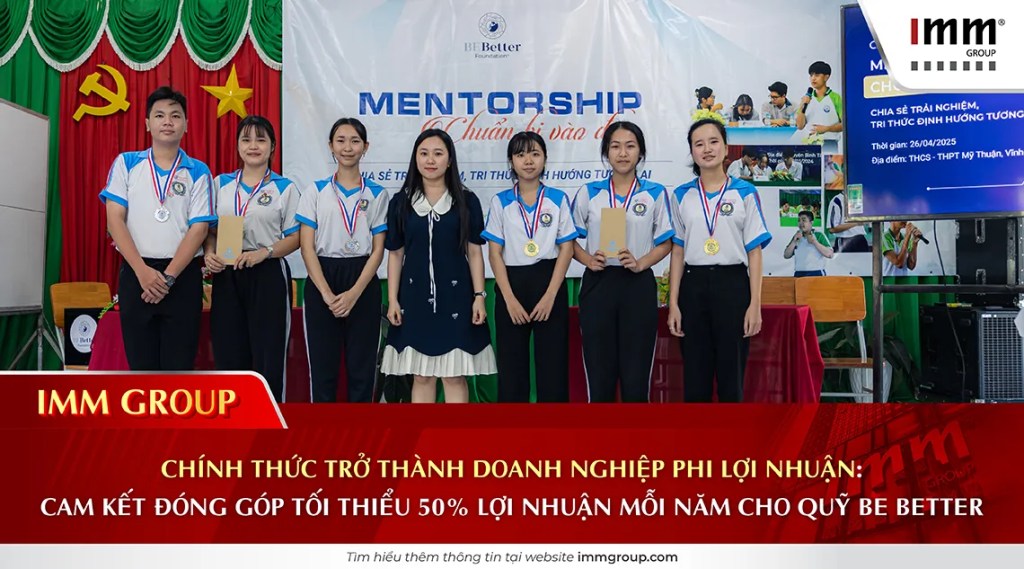
- Giving back: Since 2025, IMM Group has operated as a nonprofit enterprise, committing at least 50% of its annual profits to the Be Better Fund. By choosing IMM Group, you join us in supporting meaningful initiatives and the social responsibility and human values we pursue.
This article provides objective, useful general information about Hong Kong and Singapore and their residency pathways. It may not reflect the latest legal changes. To learn more about the investment and citizenship programs IMM Group currently offers, please see our services here.
IMM Group